
Circumstances demanded that I explore what’s right in front of me. Can we be delighted and inspired by a view that’s right here, in our homes, unchanging day after day? Go on and have your hip replaced, a stride in the direction of turning bionic, and explore the possibilities! I spent two weeks out from behind my work desk, reading books, drinking tea, listening to Classical for Pets on Amazon Music, icing a slowly healing 8-inch incision, performing at-home PT exercises, and swelling with gratitude because of how truly lucky I am!
Gratitude allowed me to enjoy the view more and more each day!

FTD had delivered a flower arrangement on my doorstep. “I’m sure it will take time to regain [your strength]. I’m thankful you have a cozy environment to recover in. . . I remembered you said you loved getting flowers,” shared a coworker, wise beyond her years, when I thanked her for the bouquet.
Pale pink roses shared space with darker hued carnations and tiny, white daisy-looking flowers. Are those periwinkle accents freesia, perhaps? Spiky ferns and deep green leaves frame the arrangement. I gaze at the flowers every day, as I recover. They brighten up an environment that is at once familiar — no doubt it is my living room, my well-loved recliner, and my throw blanket — and yet it is an environment transformed — with rugs removed, bulky furniture rearranged, and medical accessories scattered about.
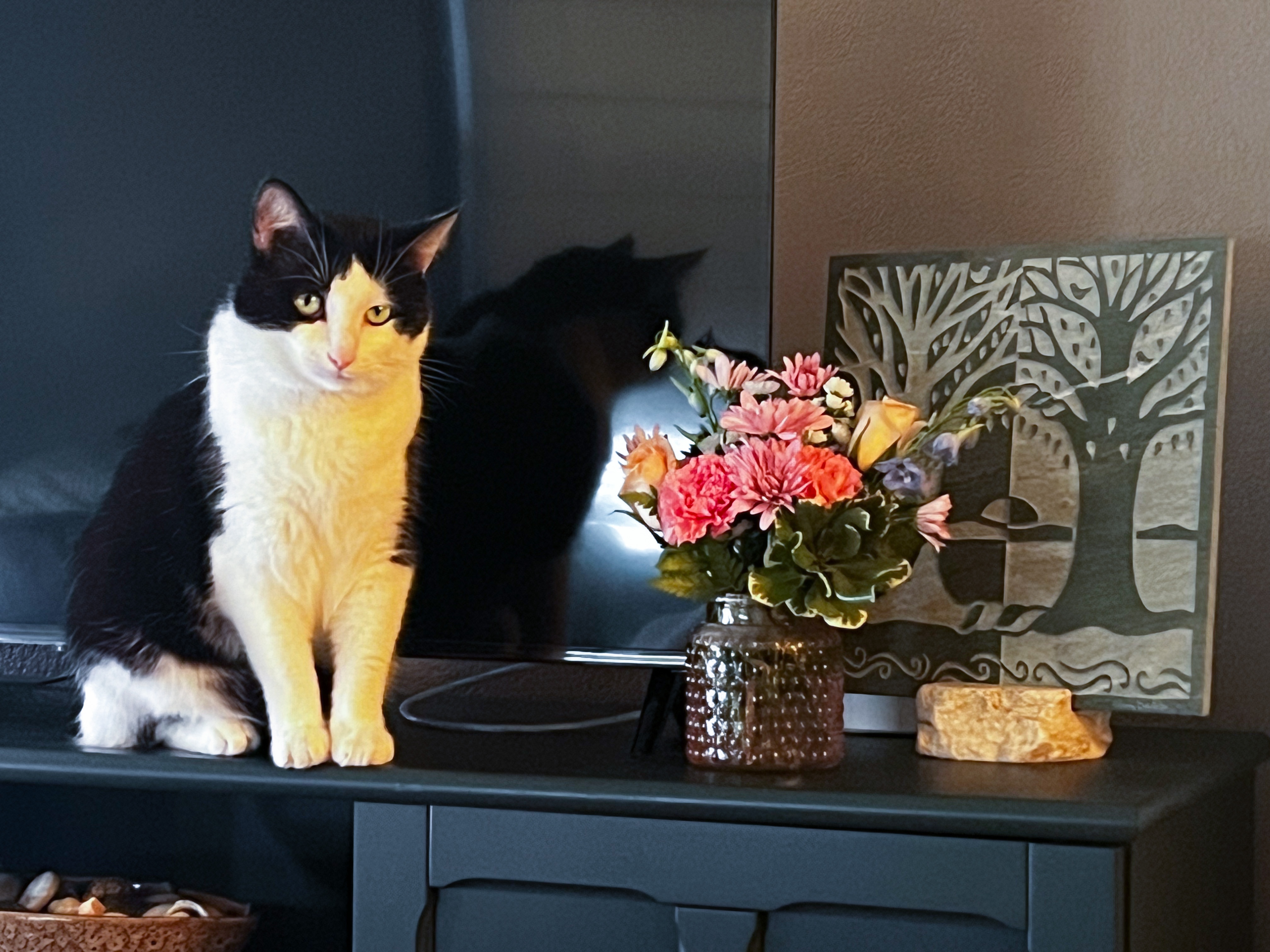
A borrowed walker, an indispensable ICEMAN cooling system, prescription meds, cough drops and my very first grabber, clothing hook, and summoning bell are within easy reach, to aide my at-home recovery. Cough drops? A friend who had recently been through hip surgery had warned me that I’d have a dry, scratchy throat after the trauma of being intubated during surgery. She also brilliantly recommended that I purchase Woxers, a raised toilet seat, and bathing wipes (links below). A summoning bell? Yep – that’s my partner’s sense of humor.
I had everything I needed, to rest and recover. So I rested, in hopes of a quick recovery – I don’t think I’ve ever rested, dozed, napped, snoozed or slept so much in my life. Family, coworkers, friends, and neighbors were full of advice for recovery; I held on to what worked for me and ditched the rest.
”Do your PT but don’t push yourself otherwise. Our bodies only have so much energy, and we need energy to heal. . . We feel like we can handle things and then we find ourselves exhausted. Exhaustion doesn’t promote healing,” advised one experienced friend who has been through a lot.
So, I knew I’d have lots of time to read and reflect, finding entertainment or boredom in my surroundings, mental stimulation or mind-numbing drudgery, peace of mind or frustration. As a unabashed learner I turned to a book I’ve been meaning to read; it was the right choice and helped me to have a meaningful, inspired respite: Resilience that Works: Eight Practices for Leadership and Life by Marian N. Ruderman, Cathleen Clerkin, and Katy’s C. Fernandez, published in 2022 by the Center for Creative Leadership.

What could this book teach me, between naps?
The Eight Practices:
- Physical Activity: Leading is a Full-Body Endeavor
- Sleep: Nature’s Reboot
- Mindfulness: Mind Your Leadership
- Cognitive Reappraisal: Leading without Letting Your Thoughts Mislead You
- Savoring: The Power of Prolonging the Positive
- Gratitude: Why Resilient Leaders Give Thanks
- Social Connection: Invest in Relationships
- Touch: The Benefits of Positive Physical Contact
Physical Activity: Leading is a Full-Body Endeavor — “Make sure you do your PT!” they said. The booklets, pamphlets, training video, and discharge instructions emphasized physical therapy from day one. It begins simply, with muscle engagement to prevent blood clots, even while still in the hospital bed. Round 1 at home exercises are done laying in bed. The patient in the illustrated instructions was smiling; I was not smiling. Round 2 at home exercises are more challenging, with standing exercises added to the routine already learned and practiced — trust me, no one was smiling!
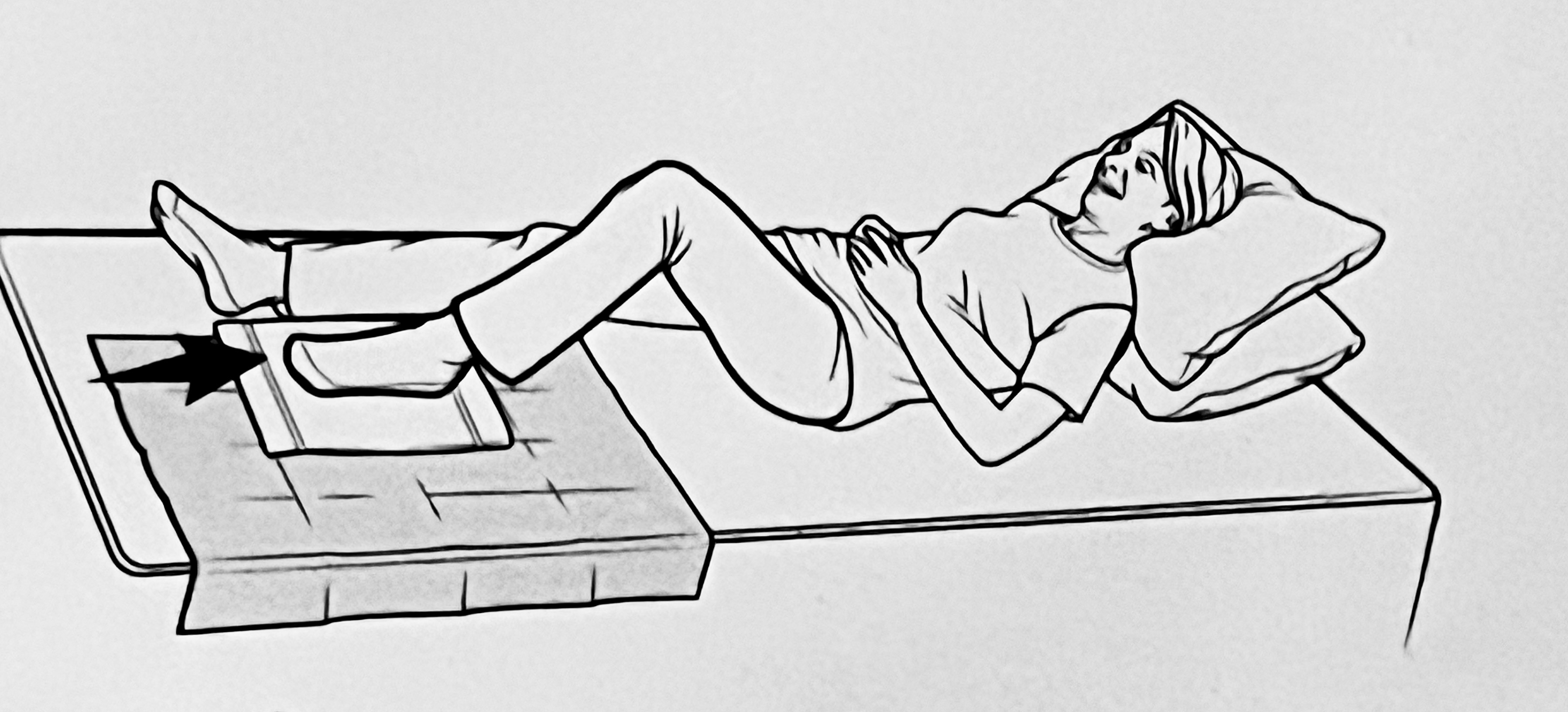
We know the importance of consistent exercise – even those of us who are novices to surgery. Did I mention that this is my first surgery, at 49 years old? The doctors, nurses, physical therapists, and physician assistants had high expectations. We’re talking about PT 2-3 times a day, 10 – 15 reps, progressively more exercises and progressively more challenging. . . beginning as soon as the anesthesia starts to wear off.
- Sitting up (listening to discharge instructions is optional)
- Swinging legs over the edge of the bed (“she might not remember this conversation”)
- Transitioning to a chair (this is why a responsible adult must accompany the patient)
- Walking to the bathroom (we’re about to get intimate with the nursing staff)
- Just . . . try (with a spinal nerve block folks don’t always know when they have to go; signals can be . . . lost in translation)
- “Call out for help, before attempting to stand” (it’s nothing the nurses haven’t seen before)
When I emerged from the bathroom, almost as big as the hospital room itself, my bed was gone — there was no going back! Medications made me a bit woozy, so Saltines and apple sauce appeared, along with water and hot tea. Standing was precarious at first, but I had a nurse at each elbow, a belt around my waist to disrupt a potential fall, and stylish yellow socks with rubber grips on top and bottom.
With care, a loving partner, and a Subaru that could drive up a short, steep incline and onto the lawn, to get me properly to the front door, I made it home, where I’d be nesting for weeks to come.

Sleep: Nature’s Reboot — The “view” from here is the inside of my eyelids, more often than not. For the first few days I was sleeping more than I was awake! Drug-induced, or not, my body wanted rest. My body needed rest. I didn’t resist or protest, too much, when my body demanded rest.
After months of poor sleep, being woken up by the pain of rolling over, the last 10 or so sleeps leading up to surgery had been fitful, at best. Even with the assistance of a sleep aide I was up 2, 3, or 4 times a night, had trouble falling asleep and often woke up well before I’d hoped to. I was remembering my dreams, in detail — all full of labyrinths, colorful characters, upside down worlds, and a mismatch of ideas, scenarios, and possibilities.
Such dreams are always happening, I know, but when I’m tossing and (ouch!) turning I never really get into that deep, most restful and rejuvenating sleep. I hover on the edge of consciousness and wake often with a head full of dreams. If I weren’t so tired I would have tried to jot them down.
I won’t return to work until I am much more alert, with my pain under control and only trips to the raised toilet seat waking me up at night. If I could just train myself to skip the nightly hot tea . . .well, I’d have fewer trips.
Sleep IS important . . . and there are lots of restrictions around sleep — not on the surgical side, hips aligned, without crossing my legs, etc. So, my most restful sleep has been in a recliner, often with a cat purring in my ear, which I don’t mind one bit.

Mindfulness: Mind Your Leadership (and Life) — “The goal of mindfulness is not to engage in a practice without distraction; rather, it’s to direct your attention intentionally and nonjudgmentally to the present moment and to redirect your attention when it wanders. . . When you engage with a specific sense, you immerse yourself in it as if you were experiencing it for the fist time. With practice, you’ll be able to do this with almost any ordinary daily sensation.” (Resilience, Chapter 5)
Be here now — this is my daily affirmation!
I take a deep breath and realize I’m blessed with the ability to feel, really feel! My body tells me, loud and clear, how I’m doing, how the healing process is going. This doesn’t always feel the best. . . far from it. “Stay ahead of the pain,” everyone says. Medicine is one way to accomplish this, and I’m all in. Mindfulness is another way to take care of yourself, and I’m all in!
I realize that the aches, pains, twinges, cramping, tenderness, soreness, and chills aren’t the only experiences I’m having! A “Luxurious Relaxation Room Spray,” gifted to me prior to surgery, fills the room with lavender, rosemary, and chamomile — I breathe deeply. Those mints I was told to pick up are a lovely, numbing lemon mint — I find some relief. There is an ice pack on my right hip and my left side is draped with a heated blanket — I sigh into the comfort that both provide!

My feet are elevated, to reduce swelling. The blinds are raised, to let the autumn sunshine in. Cats are everywhere I look, to offer their special brand of comfort. The sound of classical music fills the air, to calm my nerves; this is one of my mother’s favorite ways to relax. And I do take the pain medication I’ve been prescribed, to stay ahead of the pain.
Cognitive Reappraisal: Leading without Letting Your Thoughts Mislead You — My head is also in the game and the thoughts I allow in are an important part of my experience, and ultimately how the view looks, from my recliner.
I won’t lie — it’s easy to jump to extreme, terrifying conclusions, to see the situation as catastrophic.
- Today is worse than yesterday — I’ll never walk without a cane!
- Where did this new swelling come from? — the ice isn’t working!
- Everything takes longer than it should — crap, I have to pee again!
- I have to keep the dressing, over my incision, dry — I’ll never get to soak in the tub again!
- Why am I watching the clock? — that’s it, the narcotics have me beat!
- Six weeks before I can drive? — my independence is gone!
Breathe — get back into the moment! Think again!
- This too shall pass!
- This too shall pass!
- This too shall pass!
- This too shall pass!
- … you get the idea.
My first thought isn’t always right. In fact, my first thought is often quite wrong, so I give myself lots of grace. This means that I have to pause, to think again. Mindfulness practices help.

Savoring: The Power of Prolonging the Positive — Coffee is a vital part of my environment! This is true no matter what the external circumstances are, be that traveling by train, bike camping, visiting a home without a coffeemaker on the premises, or generally being on the go.
I knew I’d be stationary during my recovery – home bound! So, my hazelnut 50/50 decaf or the Ghirardelli caramel caramel (yep, double caramel) could take me places. That first steamy cup, savored on the corduroy couch in the sunroom, looking out on the backyard bird feeders, was a delight that I savored! The afternoon pick-me-up that roused me from another nap seemed like more of a necessity, but tasted just as good in my recliner.
During my recovery my partner has been kind enough to run out for an occasional freshly brewed cup of Highlander Grogg, a seasonal favorite. “Highlander Grogg coffee is unique and delicious. It implements a blend of aromatic vanilla, rum, toffee, butterscotch, spices, and brown sugar notes. The flavor is reminiscent of a Misty highland moor in Scotland.” (One Great Coffee)

The best part of coffee is every part of coffee, so I savor it! The strong smell of black coffee, the warmth of my favorite mug cupped between both hands, the sound of the water kettle whistling, which builds anticipation, and the tiny jolt of energy and excitement that follows the first cup.
Find your own version of this experience; expand your view!

Gratitude: Why Resilient Leaders Give Thanks — I’ve had a gratitude practice for years now, listing 5 unique things I’m grateful for each night before bed. Taking the time to reflect on the day takes just a few moments, considering challenges I’ve faced and evaluating how well, how maturely, I’ve faced them.
In a way gratitude is the natural end result of the mindfulness practice I mentioned earlier. Be here now, remember? I’m invited to look around and take in my environment. I’m so fortunate, for the flowers, the fur babies, access to medical assistance and insurance that supports my care and recovery. My heated blanket was gifted to me — I am loved! The ICEMAN is a Godsend – I am privileged! My problems are, without a doubt, first world problems – I am grateful!
When I find myself mired in challenges — physical, mental, or spiritual — I take an active stance. I put pen to paper (figuratively) and make that gratitude list. I might give myself 5 minutes to feel sorry for myself and then I’m mentally rehearsing the reasons I have to feel supported and loved. I’m out on FMLA so my employment is secure. My organization offers short-term disability benefits so I don’t have to deplete my paid time off. My work team is supportive, picking up my tasks for as long as needed. My social team is supportive, checking in on me regularly.
Gratitude:
- Medical insurance
- Realizing early on that surgery was necessary
- Room to act quickly, so I can get down to the business of recovery
- Loving family
- Social support in place
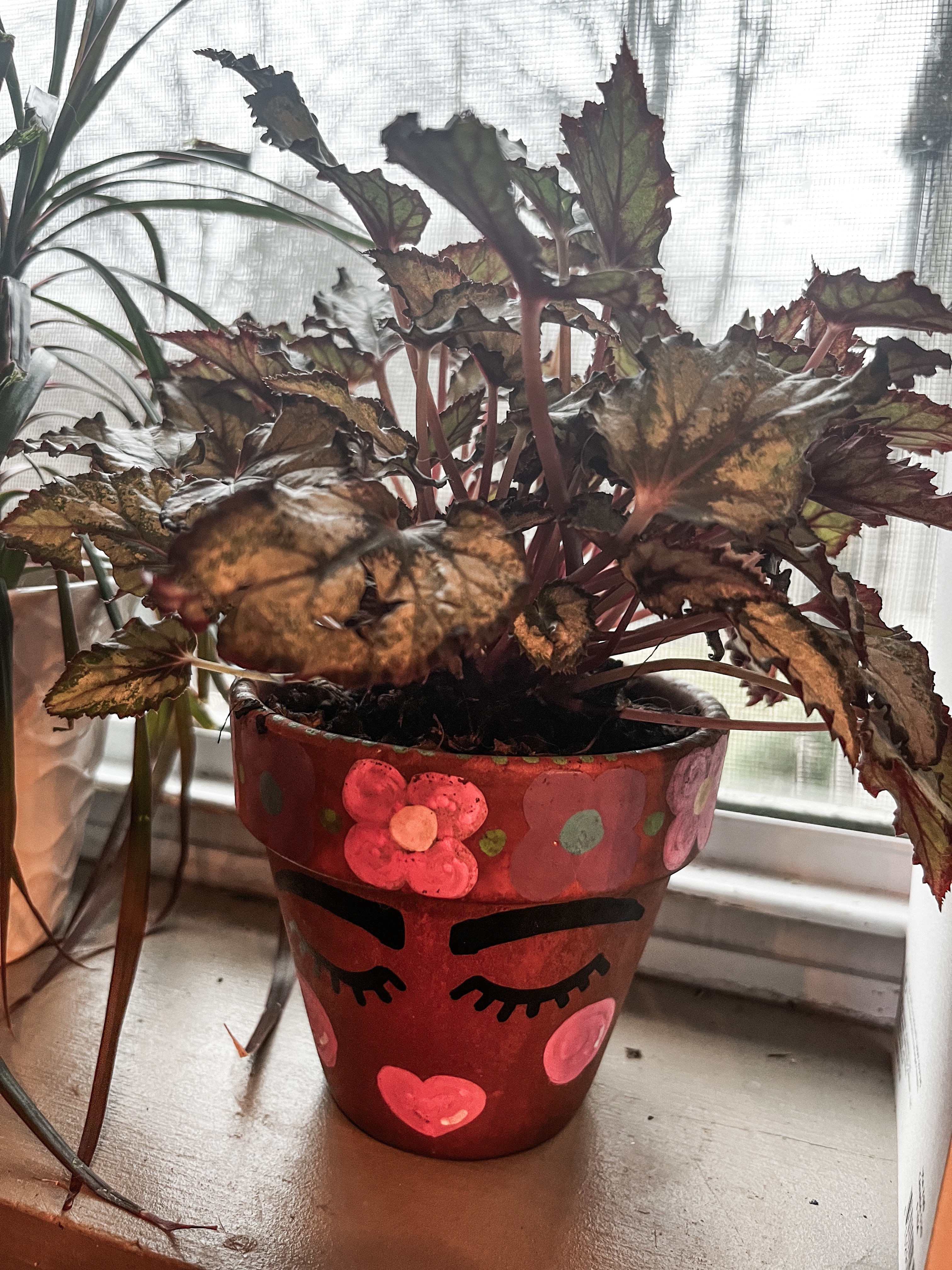

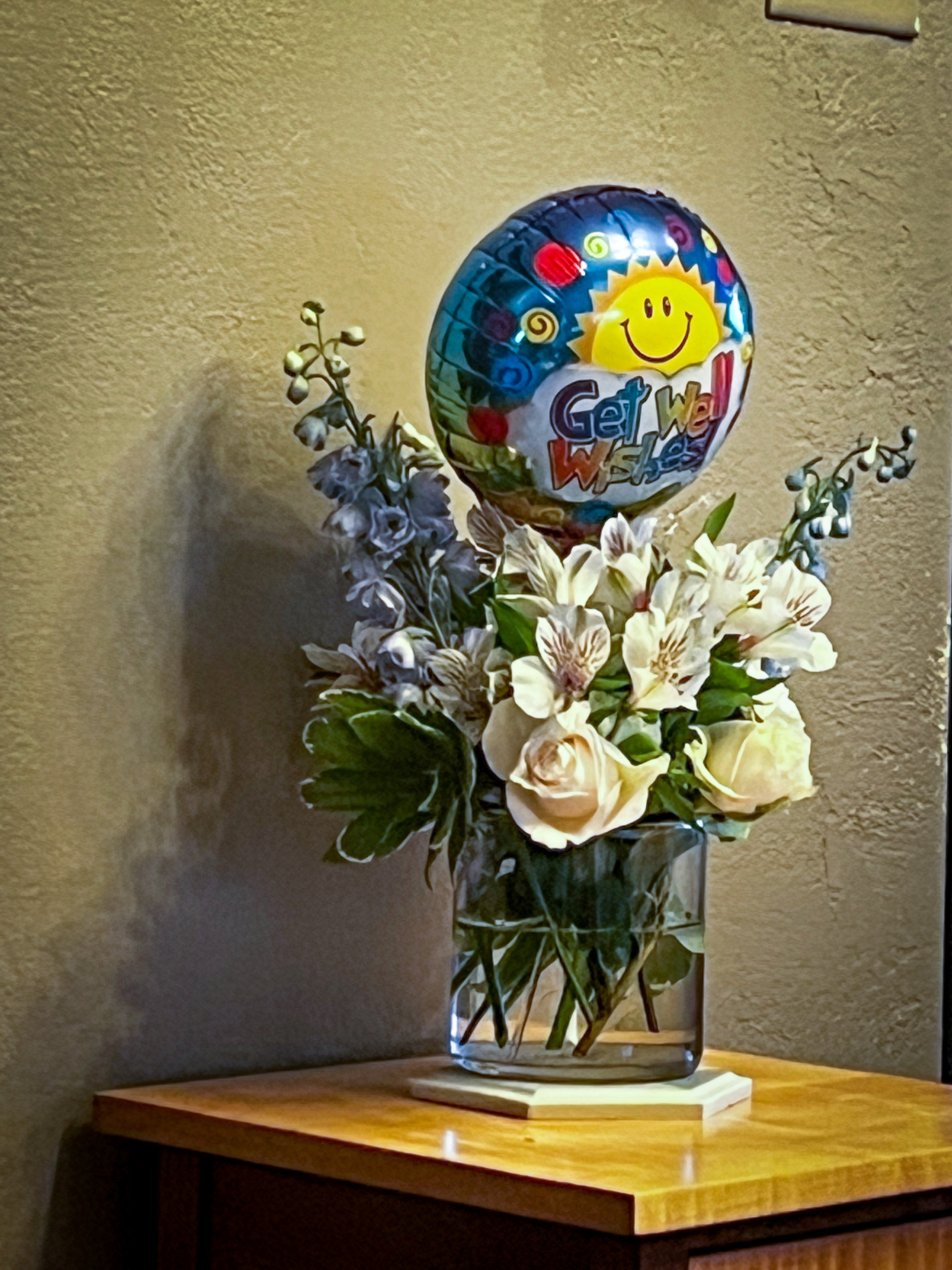

Social Connection: Invest in Relationships — We are beings that need community in order to thrive. The need for social connection becomes especially apparent when we are in need, dependent, and reliant on others for our most basic needs. Surgery and recovery are inconceivable, unimaginable, literally impossible alone.
A network of caregivers springs up in the orthopedic unit, in pre-op, as you put immense trust in a surgical team and your anesthesiologist, and again in post-op. These are folks you hope never to see again, yet they sooth you, reassure you, walk you through the day, and understand what you are going through. They have seen it all before! Your hospital community dissolves upon your release from the orthopedic unit, but you are glad they came together on that day. They send you a ‘Get Well’ card signed by the team.
My immediate and extended family check in on me, from afar, once I’m home. Calls and texts, flowers and cards, Facebook messages and video calls demonstrate their care and concern. I welcome them into my living room; they fill the space. I realize that they have me in their prayers and I welcome that.
Because I have invested in my relationships, in my network of friends, neighbors, and colleagues, I feel supported. This takes on a lot of different appearances. My walking group (who are also my book club members, cycling buddies, and dear friends) start their walk at my place the week after surgery, just to check in on me. Funny cat photos blow up my phone and I can’t help but grin. There are offers of home cooked meals and Uber Eats. Food heals! Another friend had arranged a group breakfast the day before surgery so I’d remember how connected I am.
”We are wired to be caring for the other and generous to one another. We shrivel when we are not able to interact. I mean, that is part of the reason why solitary confinement is such a horrendous punishment. We depend on the other in order for us to be fully who we are.” Desmond Tutu, The Book of Joy: Lasting Happiness in a Changing World

Touch: The Benefits of Positive Physical Contact — In the end, recovery from surgery is a deeply physical endeavor; you have to give your body the time it needs, to rest and to heal. The final resilience practice, from the book I’ve been referencing – remember?, is positive physical contact. A reassuring hug, a hand to hold at bedside, an arm around your shoulders, or a foot massage is what we’re talking about.
Do these gestures reassure? Yes! Do they offer a distraction? Most definitely! Are they welcomed? Well, that depends on the individual, of course. I welcomed them all! There is so much a body can’t do, during recovery, that it’s important to be reminded of what it is capable of. Even physical therapy provides such a reminder.
Pushing through the discomfort of the daily exercises leads to strength, flexibility, and endurance. Passive movement, at the hands of the physical therapist, surprised me at my first return appointment. With trust placed in my therapist I discovered, slowly and in a controlled way, what my body was and was not capable of. This exercise was at once reassuring and frustrating.
It’s not quite physical touch by a fellow human, but the feeling of the warm water of a first shower, after days of cleansing wipes, is comforting. I can’t wait for clearance to take my first bath long, hot bubble bath. I’m equally looking forward to my return to the heated pool and sauna at the gym I joined in the months prior to surgery. I recall the feeling of lightness I had when I first entered the water. The weight of the world lifted off of my weary, sore, stressed joints. I trust that feeling will be enhanced when I return to the gym.

What else? I may have strayed a bit far from portraying my physical environment during recovery. That’s because the kindness I leaned so heavily on was just as important, just as striking, as the most beautiful arrangement of flowers.
On an unseasonably warm November day my partner helped me out into the yard. There were three steps to get out of the back door – he helped me master those. Tiny steps helped me across the yard, to the welcoming fire pit area. I was still home, having been nowhere else but the doctor’s office in two weeks, but home expands well beyond my recliner.
Home includes the birds chirping at the feeders, returning each day for sustenance and enrichment. Home is once again familiar and turned on its end, to support my recovery. I’m so very lucky to have a warm place to rest my head, a family that understands why I won’t be hosting Thanksgiving this year, and brave, competent doctors.
I don’t mind the view one bit!

Join me on my next adventure,
~ Kat
Related Links:
Resilience that Works: Eight Practices for Leadership and Life: Resilience that Works
Woxers: https://woxer.com
Raised Toilet Seat: RMS – Raised Seat
Ricola Cough Drops: https://www.ricola.com/en-us
One Great Coffee: Highlander Grogg – One Great Coffee
 Accidental Wanderlust
Love all of this.Ending or begining a day for gratitude can be a game changer.
LikeLiked by 1 person